Methodological Rigor: How To Extract Empirical Data From Phenomenological Accounts
Evaluating Six Independent Studies About Who The Dying Meet On the "Other Side"


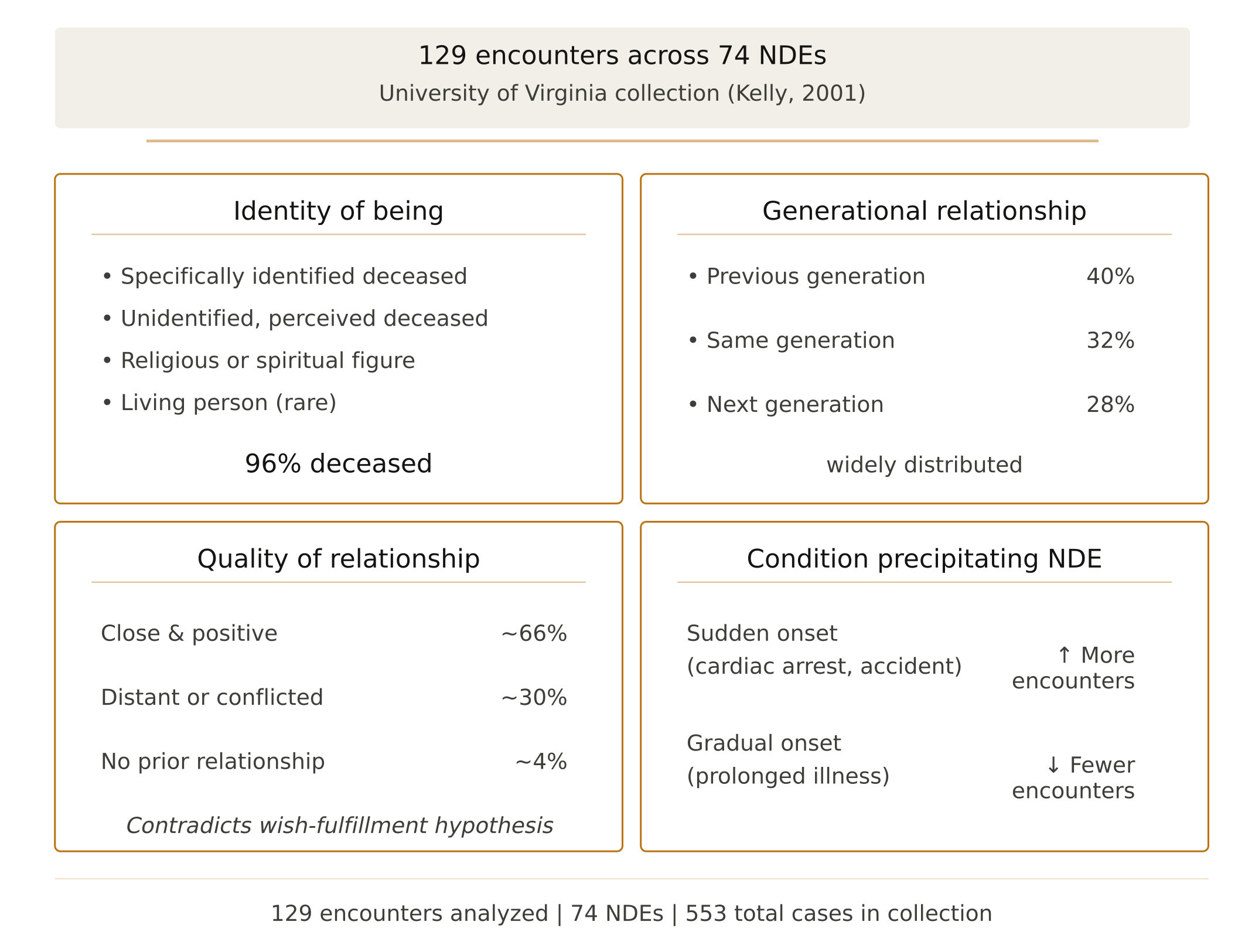
The free counterpart to this article introduced a figure sure to make a skeptic rightfully balk: across two independent datasets, 96% of the beings recognized during near-death experiences are deceased. Four percent are living. That ratio was documented at the University of Virginia and replicated by the Near Death Experience Research Foundation - different researchers and different samples, finding the same result.
Furthering the effort to turn anecdotes into evidence, this analysis goes deeper: into how those numbers were generated; into what the prospective studies control for and what they can’t; into why the reported frequency of deceased-person encounters ranges from 13% to 64% depending on who’s measuring; and, into what that variation tells us about the phenomenon itself.
My point here isn’t to argue for or against the survival of consciousness after death. It’s simply to understand what the data actually show, what the methodologies can and cannot establish, and why this particular feature of NDEs is the one that still astonishes careful researchers.
Here, we’ll examine key empirical studies supporting arguments against conventional explanations, which include:
Kelly's relationship analysis
van Lommel's prospective hospital design
Greyson's investigation of veridical information
A comprehensive review shows that surface-level data is insufficient to explain the observed phenomena.
Kelly’s 2001 Study: How the 96% Number Was Generated